


Gustav Mahler’s Second Symphony is a monumental work that explores themes of life, death, and spiritual renewal. Composed between 1888 and 1894, it is one of his most dramatic and emotionally powerful symphonies. Spanning five movements, the piece begins with a funeral march and gradually ascends to a triumphant vision of resurrection and eternal life. Featuring large orchestral forces, vocal soloists, and a full chorus, the symphony culminates in a breathtaking finale that affirms hope and transcendence. It remains a cornerstone of the symphonic repertoire and a profound musical journey through the human experience.
A swashbuckling clash of duty and destiny
Frederic is finally free from his pirate apprenticeship — or so he thinks. On his 21st birthday, he’s ready to renounce his zany crewmates and embrace a new life on land. But when he falls for the spirited Mabel, daughter of the famously fast-talking Major-General, plans go awry. Chaos erupts as the Major-General, his daughters, the police, and Frederic’s pirate band engage in a hilariously over-the-top clash of swords and parasols. With sparkling wordplay and toe-tapping tunes, Gilbert and Sullivan’s classic operetta is a delight for all ages.
All performances are accompanied by members of the Grammy Award-winning St. Louis Symphony Orchestra.
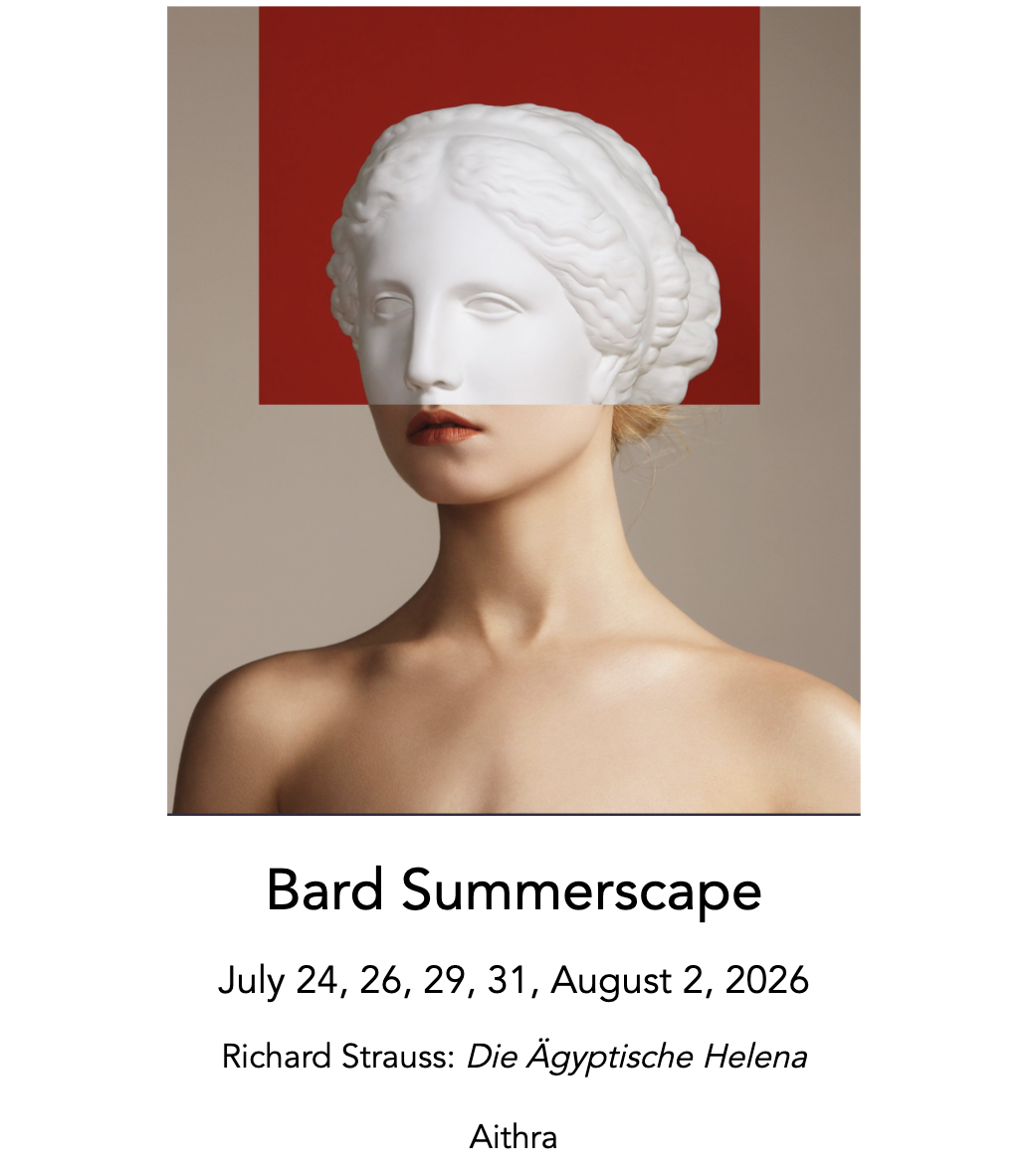
Strauss and librettist Hugo von Hofmannsthal reimagine the Helen myth, set in the aftermath of the Trojan War, as a tale of doubling: a phantom Helen returns to Troy, while the real, faithful Helen has been spirited away from harm. The vengeful husband, Menelaus, surrenders to love; the unfaithful Helen renews her devotion. The opera unfolds as a rich exploration of the complexities and contradictions of love, sexuality, and marriage.
Director Christian Räth (Meyerbeer’s Le prophète, Strauss’s The Silent Woman, Korngold’s The Miracle of Heliane) returns for his fourth Bard SummerScape to helm a full production of this neglected Strauss masterpiece. In Räth’s visionary staging, the mystical sorceress Aithra becomes the director of Helen and Menelaus’s story, seeing Helen as her alter ego and transforming the opera into a prism of fame, fantasy, and the creation of identity.
Making her SummerScape debut, the “compelling” (The New York Times) soprano Ambur Braid makes her role debut as Helena, joined by SummerScape Opera favorites: the “incredible” (OperaWire) tenor John Matthew Myers (Smetana’s Dalibor) as Menelaus and the “bright and earnest” (The New York Times) soprano Jana McIntyre (Strauss’s The Silent Woman) as Aithra. Anchored by the American Symphony Orchestra under the baton of Maestro Leon Botstein, this production continues Bard’s decades-long tradition of showcasing rare operatic gems with artists of the highest caliber.
…further announcements coming soon!

Photo by Zach Mendez

Few pieces in the choral-orchestral repertoire have achieved the global popularity of Carmina Burana. Often used in movies and television today, Carl Orff’s vivid and visceral cantata, drawn from a set of medieval secular poems, explodes with rhythmic vitality, bold harmonies, and unforgettable melodic contours.
Though written and premiered in the early 20th century, the source material for Carmina Burana is actually a medieval manuscript discovered in a Bavarian monastery, with texts dating from the 11th to 13th centuries. It contains Latin, Middle High German, and Old French texts that satirize and celebrate the caprices of fortune, the pleasures of spring, drinking, gluttony, lust, and the transient nature of life. Orff selected 24 poems and organized them into a dramatic arc framed by two invocations of the wheel of Fortune, beginning and ending with the thunderous “O Fortuna.”
Musically, Orff employs a language that is at once archaic and modern. He eschews complex counterpoint in favor of driving ostinatos, clear modal melodies, and powerful rhythmic repetition, all of which give the music an almost primal energy. His orchestration, particularly the prominent use of percussion, creates a ritualistic energy that pulses through every movement, whether evoking rustic dance, courtly song, or bawdy revelry.
The work’s central sections are divided into three parts: Primo vere and Uf dem Anger evoke the renewal of spring and youthful vitality; In taberna paints a rowdy scene of tavern life, including the famous solo of a roasted swan; and Cour d’amours explores the delicate and ecstatic expressions of romantic desire. The cantata culminates in a reprise of the iconic “O Fortuna,” reinforcing the cyclical, inexplicable nature of fate.
Orff considered Carmina Burana the cornerstone of his artistic output, famously stating to his publisher after its completion, “Everything I have written to date… can be destroyed. With Carmina Burana, my collected works begin.” This declaration underscores the work’s significance in his oeuvre and its lasting impact on choral and orchestral repertoire.
Felix Mendelssohn fell in love with Shakespeare at a young age — even studying English to read the Bard’s works in their original language. Mendelssohn wrote effervescent incidental music for the play “A Midsummer Night’s Dream,” including the famous Overture and the “Wedding March.” Our own Principal Trumpet Julian Kaplan solos in a concerto based on a hauntingly introspective poem by Hermann Hesse, and Rachmaninoff’s piece for baritone, chorus and orchestra tells a dramatic story of the transformative power of spring.

The Handmaid’s Tale serves as a cautionary tale that forces reflection on whether America’s core values—freedom and separation of church and state—are at risk. The Handmaid’s Tale provides a chilling look into an imagined future, where America’s fragile democracy collapses into religious tyranny. Echoing contemporary concerns about the overlap between government and religion, this fictional story is timelier than ever.
CONTENT WARNING: The Handmaid’s Tale, a dystopian setting based on the original novel, contains graphic depictions of sexual and physical violence, state-enforced pregnancy, and gender-based oppression, as well as scenes of psychological trauma and hangings. Viewer discretion is advised. Not recommended for children under 16 years of age.
New concert halls deserve new music, for they are both expressions of the spirit of their time. Often, and for a good reason, inaugural music is an overture, as in the two above-mentioned cases. In some other cases, e.g. if the house is not a concert hall or if something else, such as a festival, is being opened, it also can be a fanfare. Before Wing on Wing Salonen had composed one other inaugural piece that was a fanfare. He wrote it for the first Suvisoitto (Summer Sounds) festival in Porvoo, Finland, in 1986. In this two-and-a-half minute piece, scored for a small ensemble of woodwind and brass players, the contrabass clarinet had a prominent role. When I heard Wing on Wing for the first time, I had a déjà vu (or actually a déjà entendu) experience: there it is, in the first five bars of the piece already, murmuring together with cousin contrabassoon in the midst of lush string harmonies.
Wing on Wing is neither a fanfare nor an overture. It cannot be easily assigned to any other established category of orchestral music either. The instrumentation is very peculiar. Add two high sopranos void of text and some sampled speech to a large symphony orchestra and mix. Does it make a cantata? Not quite. But it evokes rich associations with earlier music by Debussy, Sibelius, Berio, Stockhausen, Saariaho, Lindberg, Salonen, and others, in which the human voice has been used in a variety of ways. A lot of other musical images cross the mind, too. Maritime associations, fauxbourdon technique, and some scales, such as the octatonic scale with alternating whole tones and semitones, strongly point towards the French connection (Debussy, Messiaen). Introducing Porichthys notatus (Plainfin Midshipman) in the 'Cadenza' adds a new paragraph, next to George Crumb's Vox Balaenae, to the fish chapter of zoomusicology. Long pedal points, violin tremolos, and sudden brass chords in the section immediately following the 'Cadenza' strongly evoke Sibelius, as do, on the other hand, the 'storm' sections. There are few pieces in recent orchestral music that conduct a dialog with the music of the 20th century on so many levels at the same time as Wing on Wing.
Formally, Wing on Wing is something that comes close to a symphonic fantasy. In his own program notes, Esa-Pekka Salonen dissects its form in ten sections. In a more synoptic view one could say that it consists of four movements: Introduction, Scherzo I, Slow movement with Cadenza, and Finale (Scherzo II) with Coda (Stretto).
For gorgeous melody, spellbinding coloratura, and virtuoso vocal fireworks, I Puritani has few equals. On New Year’s Eve, the curtain goes up on the first new Met production of Bellini’s final masterpiece in nearly 50 years—a striking staging by Charles Edwards, who makes his company directorial debut after many successes as a set designer. The Met has assembled a world-beating quartet of stars, conducted by Marco Armiliato, for the demanding principal roles. Soprano Lisette Oropesa and tenor Lawrence Brownlee are Elvira and Arturo, brought together by love and torn apart by the political rifts of the English Civil War, with baritone Artur Ruciński as Riccardo, betrothed to Elvira against her will, and bass-baritone Christian Van Horn as Elvira’s sympathetic uncle, Giorgio.
Since the iconic Philadelphia Orchestra recording led by Eugene Ormandy was released in 1962, these joyous concerts have become an annual tradition treasured by fans.

Summoned by Fate. Guided by Faith.
The Knights of the Holy Grail are in decline. Their ruler, Amfortas, is ailing from an unhealable wound. While the knight Gurnemanz wistfully recalls the prophecy of a guileless youth who will restore the order, he refuses to believe that the naive, young man before him could be that savior. And so the youth, Parsifal, leaves on what will become a journey that will bring him full circle back to the knights.
For the first time in 25 years, Wagner’s final opera returns in a brand-new San Francisco Opera production. Matthew Ozawa— whose work was last seen in the acclaimed Orpheus and Eurydice—directs this meditation on compassion, focusing on the intersection of Eastern and Western spiritual traditions in a mythical world of knights and sorcerers.
Music Director Eun Sun Kim continues her exploration of Wagner’s works through this sublime score, brought to life with a cast of Wagnerian superstars joined by the San Francisco Opera Orchestra, Chorus, and Dancers.


previous performances & events:
2025/2026 Season
Blumenmädchen || Parsifal || San Francisco Opera
Soprano || Wing on Wing (Esa-Pekka Salonen) || Los Angeles Philharmonic
Soprano || Glorious Sound of Christmas || The Philadelphia Orchestra
Elvira (cover) || I Puritani || The Metropolitan Opera
Janine/Of-Warren || A Handmaid’s Tale || Detroit Opera
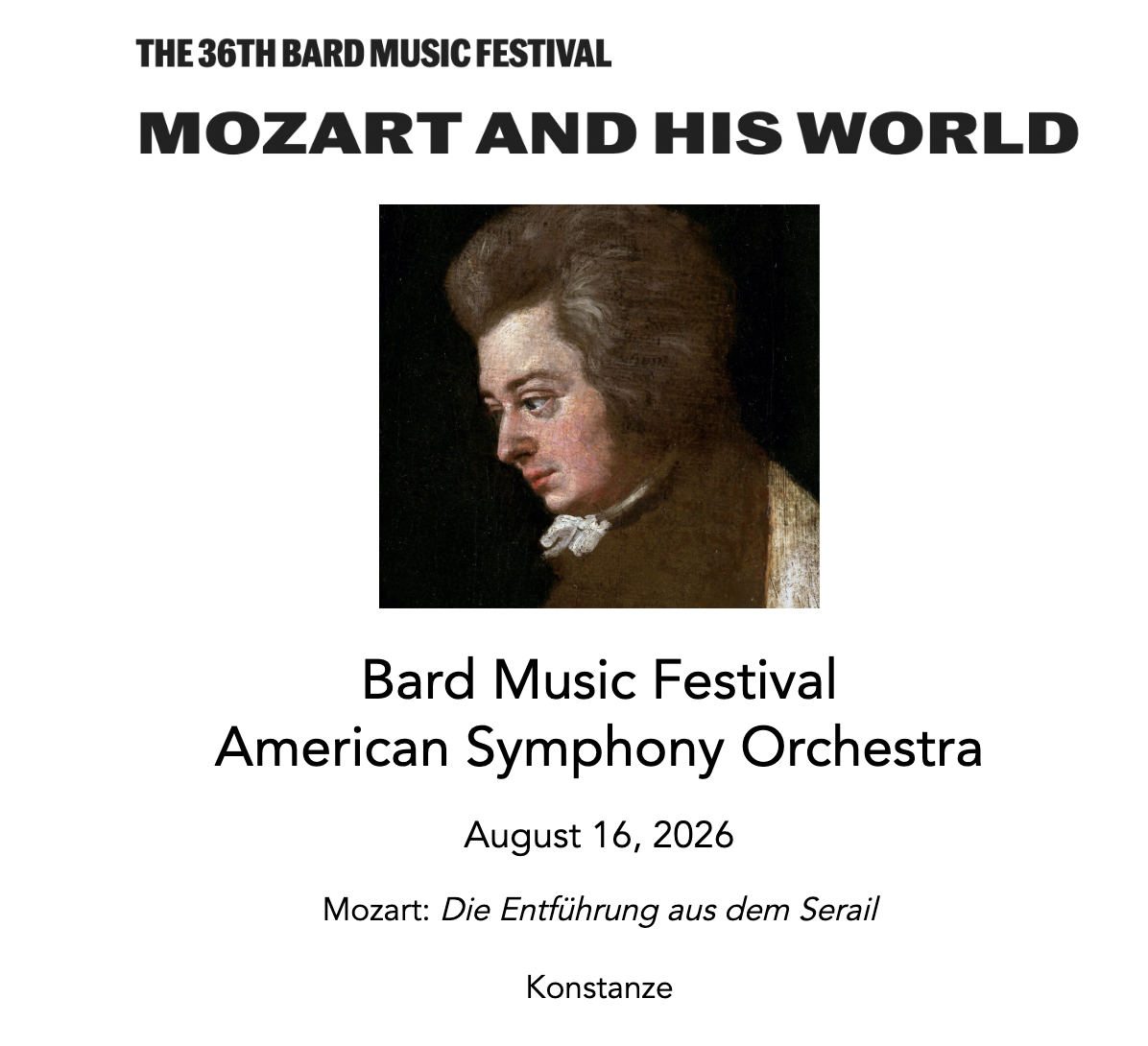
Konstanze || Die Entführung aus dem Serail || Bard Music Festival
Soprano || A Midsummer Night’s Dream (Mendelssohn) || Kansas City Symphony
Soprano Soloist || Carmina Burana || South Bend Symphony
Soprano Soloist || Mahler Symphony 2 || Tulsa Symphony
Soprano Soloist || President’s Council Concert || Tulsa Opera
Mabel || Pirates of Penzance || Opera Theatre of Saint Louis
Aithra || Die Ägyptische Helena || Bard Summerscape
2024/2025 Season
Soprano Soloist || Mahler Symphony 4 || The Orchestra Now
Soprano Soloist || Vier Letzte lieder || The Orchestra Now
Soprano Soloist || A Midsummer Night’s Dream (Mendelssohn) || Los Angeles Philharmonic
Soprano Soloist || Pli selon pli: improvisation sur Mallarmé || New York Philharmonic
Armida (cover) || Rinaldo || Detroit Opera
Masterclass & Recital || University of Tulsa
Marie || La fille du Régiment || Opera Santa Barbara
Tytania || A Midsummer Night’s Dream || Opera Theatre Saint Louis
Soloist || Martinů and His World || Bard Music Festival
2023/2024 Season
Soprano Soloist || Carmina Burana || New Jersey Symphony
Adele || Die Fledermaus || Sacramento Philharmonic & Opera
Die Königin der Nacht (cover) || Die Zauberflöte || San Francisco Opera
Mother-In-Law (cover) || Innocence (K. Saariaho) || San Francisco Opera
Opera Favorites Concert || Tulsa Opera
La Divina: Centennial Celebration of Maria Callas || Opera Santa Barbara
Soloist || Rodgers and Hammerstein Salute || Sacramento Choral Society & Orchestra
Soloist || Berlioz and His World || Bard Music Festival
2022/2023 Season
Daphne || Daphne || American Symphony Orchestra - Carnegie Hall
Soprano soloist || Carmina Burana || Seattle Symphony
Soprano soloist || Carmina Burana || Santa Barbara Symphony
Cinderlla || Into the Woods || Tulsa Opera
Giulia || La scala di seta || Opera Santa Barbara
2021/2022 Season
Soloist || Hozhò (Jerod Impichchaachaaha’ Tate) || Signature Symphony
Marianne || Elinor and Marianne (Aferdian Stephens & Marella Martin Koch) || The Rally Cat
Semele || Semele || Opera Santa Barbara
Aminta || Die Schweigsame Frau || Bard Summerscape Festival
2020/2021 Season
Barbarina || Le nozze di Figaro || Canadian Opera Company (canceled)
Blumen Mädchen || Parsifal || Canadian Opera Company (postponed)
Witness/Singer/Woman 1 (cover) || Lessons in Love and Violence || Lyric Opera of Chicago (canceled)
Gilda (cover) || Rigoletto || Tulsa Opera
Die Königin der Nacht (cover) || Die Zauberflöte || Palm Beach Opera
The Dallas Opera Competition Semi-Finals || Online
Soprano soloist || Pergolesi Stabat Mater || Church of Saint Mary
Jensen Foundation Finals || Online
Norina || Don Pasquale || Opera Santa Barbara
Die Königin der Nacht || Die Zauberflöte || Opera Theatre of Saint Louis (postponed)